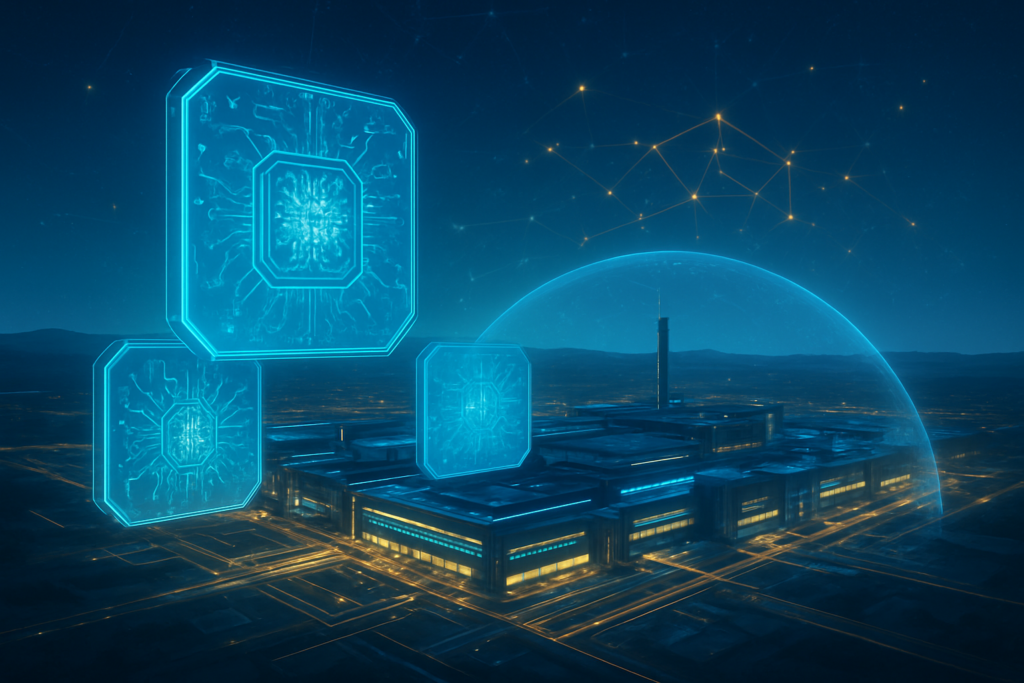
In a move that signals a paradigm shift in global technology trade, the U.S. government has officially implemented a 25% national security tariff on the world’s most advanced artificial intelligence processors, including the NVIDIA H200 and AMD MI325X. This landmark action, effective as of January 14, 2026, serves as the cornerstone of the White House’s "Phase One" industrial policy—a multi-stage strategy designed to dismantle decades of reliance on foreign semiconductor fabrication and force a reshoring of the high-tech supply chain to American soil.
The policy represents one of the most aggressive uses of executive trade authority in recent history, utilizing Section 232 of the Trade Expansion Act of 1962 to designate advanced chips as critical to national security. By creating a significant price barrier for foreign-made silicon while simultaneously offering broad exemptions for domestic infrastructure, the administration is effectively taxing the global AI gold rush to fund a domestic manufacturing renaissance. The immediate significance is clear: the cost of cutting-edge AI compute is rising globally, but the U.S. is positioning itself as a protected "Silicon Fortress" where innovation can continue at a lower relative cost than abroad.
The Mechanics of Phase One: Tariffs, Traps, and Targets
The "Phase One" policy specifically targets a narrow but vital category of high-performance chips. At the center of the crosshairs are the H200 from NVIDIA (NASDAQ: NVDA) and the MI325X from Advanced Micro Devices (NASDAQ: AMD). These chips, which power the large language models and generative AI platforms of today, have become the most sought-after commodities in the global economy. Unlike previous trade restrictions that focused primarily on preventing technology transfers to adversaries, these 25% ad valorem tariffs are focused on where the chips are physically manufactured. Since the vast majority of these high-end processors are currently fabricated by Taiwan Semiconductor Manufacturing Company (NYSE: TSM) in Taiwan, the tariffs act as a direct financial incentive for companies to move their "fabs" to the United States.
A unique and technically sophisticated aspect of this policy is the newly dubbed "Testing Trap" for international exports. Under regulations that went live on January 15, 2026, any high-end chips intended for international markets—most notably China—must now transit through U.S. territory for mandatory third-party laboratory verification. This entry into U.S. soil triggers the 25% import tariff before the chips can be re-exported. This maneuver allows the U.S. government to capture a significant portion of the revenue from global AI sales without technically violating the constitutional prohibition on export taxes.
Industry experts have noted that this approach differs fundamentally from the CHIPS Act of 2022. While the earlier legislation focused on "carrots"—subsidies and tax credits—the Phase One policy introduces the "stick." It creates a high-cost environment for any company that continues to rely on offshore manufacturing for the most critical components of the modern economy. Initial reactions from the AI research community have been mixed; while researchers at top universities are protected by exemptions, there are concerns that the "Testing Trap" could lead to a fragmented global standard for AI hardware, potentially slowing down international scientific collaboration.
Industry Impact: NVIDIA Leads as AMD Braces for Impact
The market's reaction to the tariff announcement has highlighted a growing divide in the competitive landscape. NVIDIA, the undisputed leader in the AI hardware space, surprised many by "applauding" the administration’s decision. During a keynote at CES 2026, CEO Jensen Huang suggested that the company had already anticipated these shifts, having "fired up" its domestic supply chain partnerships. Because NVIDIA maintains such high profit margins and immense pricing power, analysts believe the company can absorb or pass on the costs more effectively than its competitors. For NVIDIA, the tariffs may actually serve as a competitive moat, making it harder for lower-margin rivals to compete for the same domestic customers who are now incentivized to buy from "compliant" supply chains.
In contrast, AMD has taken a more cautious and somber tone. While the company stated it will comply with all federal mandates, analysts from major investment banks suggest the MI325X could be more vulnerable. AMD traditionally positions its hardware as a more cost-effective alternative to NVIDIA; a 25% tariff could erode that price advantage unless they can rapidly shift production to domestic facilities. For cloud giants like Microsoft (NASDAQ: MSFT), Alphabet (NASDAQ: GOOGL), and Amazon (NASDAQ: AMZN), the impact is mitigated by significant exemptions. The policy specifically excludes chips destined for U.S.-based data centers and cloud infrastructure, ensuring that the "Big Three" can continue their massive AI buildouts without a 25% price hike, provided the hardware stays within American borders.
This dynamic creates a two-tier market: a domestic "Green Zone" where AI development remains subsidized and tariff-free, and a "Global Zone" where the 25% surcharge makes U.S.-designed, foreign-made silicon prohibitively expensive. This strategic advantage for U.S. cloud providers is expected to draw even more international AI startups to host their workloads on American servers, further consolidating the U.S. as the global hub for AI services.
Geopolitics and the New Semiconductor Landscape
The broader significance of these tariffs cannot be overstated; they represent the formal end of the "globalized" semiconductor era. By targeting the H200 and MI325X, the U.S. is not just protecting its borders but is actively attempting to reshape the geography of technology. This is a direct response to the vulnerability exposed by the concentration of advanced manufacturing in the Taiwan Strait. The "Phase One" policy was announced in tandem with a historic agreement with Taiwan, where firms led by TSMC pledged $250 billion in new U.S.-based manufacturing investments. The tariffs serve as the enforcement mechanism for these pledges, ensuring that the transition to American fabrication happens on the government’s accelerated timeline.
This move mirrors previous industrial milestones like the 19th-century tariffs that protected the nascent U.S. steel industry, but with the added complexity of 21st-century software dependencies. The "Testing Trap" also marks a new era of "regulatory toll-booths," where the U.S. leverages its central position in the design and architecture of AI to extract economic value from global trade flows. Critics argue this could lead to a retaliatory "trade war 2.0," where other nations impose their own "digital sovereignty" taxes, potentially splitting the internet and the AI ecosystem into regional blocs.
However, proponents of the policy argue that the "national security" justification is airtight. In an era where AI controls everything from power grids to defense systems, the administration views a foreign-produced chip as a potential single point of failure. The exemptions for domestic R&D and startups are designed to ensure that while the manufacturing is forced home, the innovation isn't stifled. This "walled garden" approach seeks to make the U.S. the most attractive place in the world to build and deploy AI, by making it the only place where the best hardware is available at its "true" price.
The Road to Phase Two: What Lies Ahead
Looking forward, "Phase One" is only the beginning. The administration has already signaled that "Phase Two" could be implemented as early as the summer of 2026. If domestic manufacturing milestones are not met—specifically the breaking ground of new "mega-fabs" in states like Arizona and Ohio—the tariffs could be expanded to a "significant rate" of up to 100%. This looming threat is intended to keep chipmakers' feet to the fire, ensuring that the pledged billions in domestic investment translate into actual production capacity.
In the near term, we expect to see a surge in "Silicon On-shoring" services—companies that specialize in the domestic assembly and testing of components to qualify for tariff exemptions. We may also see the rise of "sovereign AI clouds" in Europe and Asia as other regions attempt to replicate the U.S. model to reduce their own dependencies. The technical challenge remains daunting: building a cutting-edge fab takes years, not months. The gap between the imposition of tariffs and the availability of U.S.-made H200s will be a period of high tension for the industry.
A Watershed Moment for Artificial Intelligence
The January 2026 tariffs will likely be remembered as the moment the U.S. government fully embraced "technological nationalism." By taxing the most advanced AI chips, the U.S. is betting that its market dominance in AI design is strong enough to force the rest of the world to follow its lead. The significance of this development in AI history is comparable to the creation of the original Internet protocols—it is an infrastructure-level decision that will dictate the flow of information and wealth for decades.
As we move through the first quarter of 2026, the key metrics to watch will be the "Domestic Fabrication Index" and the pace of TSMC’s U.S. expansion. If the policy succeeds, the U.S. will have secured its position as the world's AI powerhouse, backed by a self-sufficient supply chain. If it falters, it could lead to higher costs and slower innovation at a time when the race for AGI (Artificial General Intelligence) is reaching a fever pitch. For now, the "Silicon Fortress" is under construction, and the world is paying the toll to enter.
This content is intended for informational purposes only and represents analysis of current AI developments.
TokenRing AI delivers enterprise-grade solutions for multi-agent AI workflow orchestration, AI-powered development tools, and seamless remote collaboration platforms.
For more information, visit https://www.tokenring.ai/.