In a move that marks a tectonic shift in how intellectual property is protected in the age of generative artificial intelligence, Academy Award-winning actor Matthew McConaughey has successfully trademarked his voice and physical likeness. This legal strategy, finalized in mid-January 2026, represents the most aggressive effort to date by a high-profile celebrity to construct a federal "legal perimeter" around their identity. By securing these trademarks from the U.S. Patent and Trademark Office (USPTO), McConaughey is effectively transitioning his persona from a matter of personal privacy to a federally protected commercial asset, providing his legal team with unprecedented leverage to combat unauthorized AI deepfakes and digital clones.
The significance of this development cannot be overstated. While celebrities have historically relied on a patchwork of state-level "Right of Publicity" laws to protect their images, McConaughey’s pivot to federal trademark law offers a more robust and uniform enforcement mechanism. In an era where AI-generated content can traverse state lines and international borders in seconds, the ability to litigate in federal court under the Lanham Act provides a swifter, more punitive path against those who exploit a star's "human brand" without consent.
Federalizing the Persona: The Mechanics of McConaughey's Legal Shield
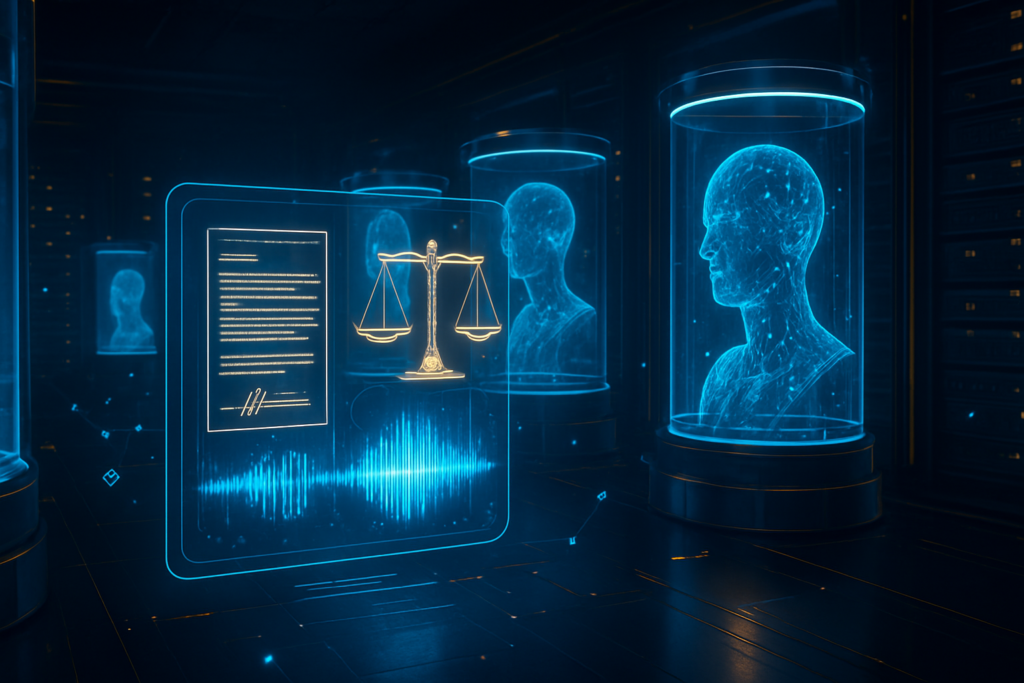
The trademark filings, which were revealed this week, comprise eight separate registrations that cover a diverse array of McConaughey’s "source identifiers." These include his iconic catchphrase, "Alright, alright, alright," which the actor first popularized in the 1993 film Dazed and Confused. Beyond catchphrases, the trademarks extend to sensory marks: specific audio recordings of his distinct Texan drawl, characterized by its unique pitch and rhythmic cadence, and visual "motion marks" consisting of short video clips of his facial expressions, such as a specific three-second smile and a contemplative stare into the camera.
This approach differs significantly from previous legal battles, such as those involving Scarlett Johansson or Tom Hanks, who primarily relied on claims of voice misappropriation or "Right of Publicity" violations. By treating his voice and likeness as trademarks, McConaughey is positioning them as "source identifiers"—similar to how a logo identifies a brand. This allows his legal team to argue that an unauthorized AI deepfake is not just a privacy violation, but a form of "trademark infringement" that causes consumer confusion regarding the actor’s endorsement. This federal framework is bolstered by the TAKE IT DOWN Act, signed in May 2025, which criminalized certain forms of deepfake distribution, and the DEFIANCE Act of 2026, which allows victims to sue for statutory damages up to $150,000.
Initial reactions from the legal and AI research communities have been largely positive, though some express concern about "over-propertization" of the human form. Kevin Yorn, McConaughey’s lead attorney, stated that the goal is to "create a tool to stop someone in their tracks" before a viral deepfake can do irreparable damage to the actor's reputation. Legal scholars suggest this could become the "gold standard" for celebrities, especially as the USPTO’s 2025 AI Strategic Plan has begun to officially recognize human voices as registrable "Sensory Marks" if they have achieved significant public recognition.
Tech Giants and the New Era of Consent-Based AI
McConaughey’s aggressive legal stance is already reverberating through the headquarters of major AI developers. Tech giants like Meta Platforms, Inc. (NASDAQ: META) and Alphabet Inc. (NASDAQ: GOOGL) have been forced to refine their content moderation policies to avoid the threat of federal trademark litigation. Meta, in particular, has leaned into a "partnership-first" model, recently signing multi-million dollar licensing deals with actors like Judi Dench and John Cena to provide official voices for its AI assistants. McConaughey himself has pioneered a "pro-control" approach by investing in and partnering with the AI audio company ElevenLabs to produce authorized, high-quality digital versions of his own content.
For major AI labs like OpenAI and Microsoft Corporation (NASDAQ: MSFT), the McConaughey precedent necessitates more sophisticated "celebrity guardrails." OpenAI has reportedly updated its Voice Engine to include voice-matching detection that blocks the creation of unauthorized clones of public figures. This shift benefits companies that prioritize ethics and licensing, while potentially disrupting smaller startups and "jailbroken" AI models that have thrived on the unregulated use of celebrity likenesses. The move also puts pressure on entertainment conglomerates like The Walt Disney Company (NYSE: DIS) and Warner Bros. Discovery (NASDAQ: WBD) to incorporate similar trademark protections into their talent contracts to prevent future AI-driven disputes over character rights.
The competitive landscape is also being reshaped by the "verified" signal. As unauthorized deepfakes become more prevalent, the market value of "authenticated" content is skyrocketing. Platforms that can guarantee a piece of media is an "Authorized McConaughey Digital Asset" stand to win the trust of advertisers and consumers alike. This creates a strategic advantage for firms like Sony Group Corporation (NYSE: SONY), which has a massive library of voice and video assets that can now be protected under this new trademark-centric legal theory.
The C2PA Standard and the Rise of the "Digital Nutrition Label"
Beyond the courtroom, McConaughey’s move fits into a broader global trend toward content provenance and authenticity. By early 2026, the C2PA (Coalition for Content Provenance and Authenticity) standard has become the "nutritional label" for digital media. Under new laws in states like California and New York, all AI-generated content must carry C2PA metadata, which serves as a digital manifest identifying the file’s origin and whether it was edited by AI. McConaughey’s trademarked assets are expected to be integrated into this system, where any digital media featuring his likeness lacking the "Authorized" C2PA credential would be automatically de-ranked or flagged by search engines and social platforms.
This development addresses a growing concern among the public regarding the erosion of truth. Recent research indicates that 78% of internet users now look for a "Verified" C2PA signal before engaging with content featuring celebrities. However, this also raises potential concerns about the "fair use" of celebrity images for parody, satire, or news reporting. While McConaughey’s team insists these trademarks are meant to stop unauthorized commercial exploitation, free speech advocates worry that such powerful federal tools could be used to suppress legitimate commentary or artistic expression that falls outside the actor's curated brand.
Comparisons are being drawn to previous AI milestones, such as the initial release of DALL-E or the first viral "Drake" AI song. While those moments were defined by the shock of what AI could do, the McConaughey trademark era is defined by the determination of what AI is allowed to do. It marks the end of the "Wild West" period of generative AI and the beginning of a regulated, identity-as-property landscape where the human brand is treated with the same legal reverence as a corporate logo.
Future Outlook: The Identity Thicket and the NO FAKES Act
Looking ahead, the next several months will be critical as the federal NO FAKES Act nears a final vote in Congress. If passed, this legislation would create a national "Right of Publicity" for digital replicas, potentially standardizing the protections McConaughey has sought through trademark law. In the near term, we can expect a "gold rush" of other celebrities, athletes, and influencers filing similar sensory and motion mark applications with the USPTO. Apple Inc. (NASDAQ: AAPL) is also rumored to be integrating these celebrity "identity keys" into its upcoming 2026 Siri overhaul, allowing users to interact with authorized digital twins of their favorite stars in a fully secure and licensed environment.
The long-term challenge remains technical: the "cat-and-mouse" game between AI developers creating increasingly realistic clones and the detection systems designed to catch them. Experts predict that the next frontier will be "biometric watermarking," where an actor's unique vocal frequencies are invisibly embedded into authorized files, making it impossible for unauthorized AI models to mimic them without triggering an immediate legal "kill switch." As these technologies evolve, the concept of a "digital twin" will transition from a sci-fi novelty to a standard commercial tool for every public figure.
Conclusion: A Turning Point in AI History
Matthew McConaughey’s decision to trademark himself is more than just a legal maneuver; it is a declaration of human sovereignty in an automated age. The key takeaway from this development is that the "Right of Publicity" is no longer sufficient to protect individuals from the scale and speed of generative AI. By leveraging federal trademark law, McConaughey has provided a blueprint for how celebrities can reclaim their agency and ensure that their identity remains their own, regardless of how advanced the algorithms become.
In the history of AI, January 2026 may well be remembered as the moment the "identity thicket" was finally navigated. This shift toward a consent-and-attribution model will likely define the relationship between the entertainment industry and Silicon Valley for the next decade. As we watch the next few weeks unfold, the focus will be on the USPTO’s handling of subsequent filings and whether other stars follow McConaughey’s lead in building their own identity fortresses.
This content is intended for informational purposes only and represents analysis of current AI developments.
TokenRing AI delivers enterprise-grade solutions for multi-agent AI workflow orchestration, AI-powered development tools, and seamless remote collaboration platforms.
For more information, visit https://www.tokenring.ai/.
Companies Mentioned:
- Meta Platforms, Inc. (NASDAQ: META)
- Alphabet Inc. (NASDAQ: GOOGL)
- Microsoft Corporation (NASDAQ: MSFT)
- The Walt Disney Company (NYSE: DIS)
- Warner Bros. Discovery (NASDAQ: WBD)
- Sony Group Corporation (NYSE: SONY)
- Apple Inc. (NASDAQ: AAPL)
By Expert AI Journalist
Published January 15, 2026